Commission Artwork Inspired by Whistler, Blackcomb and Personal Memories
Commissioning a Whistler mountain painting begins with a conversation about memory, place, emotion, and purpose. For many collectors, commission artwork is not simply about recreating a mountain view. It is about capturing a personal connection to Whistler, Blackcomb, the Sea-to-Sky region, a favourite ski run, a family memory, or a moment of adventure that deserves to live on as an original work of art.
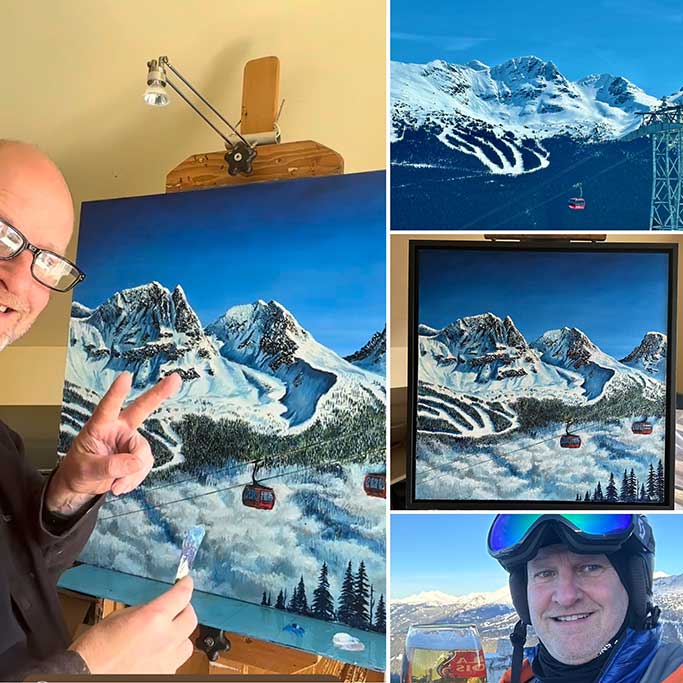
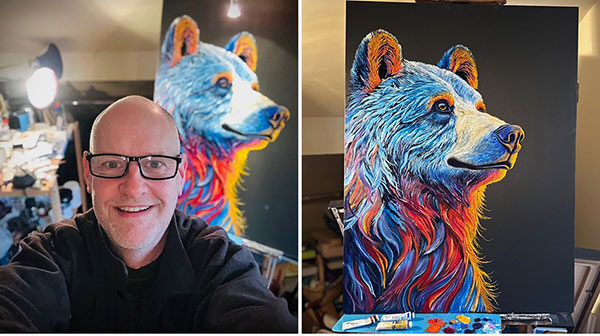
I am Graham Watts, a Canadian artist based in British Columbia. I create original oil paintings of mountains, wildlife, skiing scenes, Vancouver cityscapes, and West Coast landscapes. Over the years, I have created many commissioned paintings inspired by Whistler, Blackcomb, Black Tusk, the Sea-to-Sky corridor, dramatic alpine terrain, and deeply personal mountain memories.
A Whistler commission is one of the most personal types of artwork I create. The goal is not just to paint what a place looks like. The goal is to paint what that place means to you.
What Is a Whistler Mountain Commission?
A Whistler mountain commission is a one-of-a-kind original painting created specifically for a collector. It may be based on a favourite ski run, a dramatic alpine viewpoint, a memory of Whistler Village, a family ski trip, a chalet view, a Blackcomb powder day, or a personal adventure connected to the mountain.
Some collectors want a large statement piece for a living room, ski chalet, condo, office, or fireplace wall. Others want a painting that captures a specific memory: the feeling of skiing deep powder, standing below Black Tusk, looking across the Tantalus Range, or remembering years spent in Whistler with family and friends.
The possibilities are almost endless, but the process always starts with one question:
What is the emotional reason behind the painting?
That answer becomes the foundation for the entire commission.
Step 1: Start With the Memory, Not the Image
When someone contacts me about commissioning a Whistler mountain painting, the first thing I want to understand is their passion.
Why this painting?
Why Whistler?
Why this mountain, this ski run, this view, this memory?
Sometimes the answer is about skiing. Sometimes it is about a lifetime of visiting Whistler Blackcomb. Sometimes it is about a family connection, a favourite alpine run, a powerful outdoor experience, or a home that needs a bold and meaningful statement piece.
The emotional purpose matters more than perfect reference photos at the beginning. A collector may only have a few phone pictures, an old ski photo, or a rough idea. That is enough to start. Once I understand what matters most, I can begin building the painting around that memory.
A successful commission is not just a picture of a mountain. It is a personal story turned into an original oil painting.
Step 2: Choose the Right Size for the Space
After understanding the purpose of the painting, the next major decision is size.
Many of my clients are looking for a statement piece. They want something that will have presence in a living room, condo, ski chalet, entranceway, office, or over a fireplace or sofa. A painting of Whistler or Blackcomb can be dramatic and powerful, but the size has to work with the room.
I often ask clients to measure the wall where the painting will hang. If possible, I may visit the space in person. If that is not possible, I ask for a photo of the room and wall.
From there, I can create a visual mockup using Photoshop. This helps the collector see how different canvas sizes will look in their actual space. Most people find it difficult to imagine the scale of a large canvas on a blank wall, so this step can be extremely helpful.
A custom painting should feel like it belongs in the home. It should not feel too small, too cramped, or disconnected from the space around it. The size, wall, furniture, lighting, and emotional purpose all work together.
Step 3: Define the Budget Clearly
Commissioning an original oil painting should feel exciting, not confusing. That is why I believe in being clear about pricing and expectations from the beginning.
My commission pricing is generally based around $2 per square inch. This makes it easier to understand how size affects budget.
For example, a 40 x 30 inch canvas is 1,200 square inches. At $2 per square inch, that creates a clear starting point for the project budget.
Once the size, scope, timeline, shipping or delivery needs, and overall concept are discussed, I provide a written offer of intent by email. This includes the budget, project details, timeline, completion date, delivery or shipping information, and payment structure.
My standard commission structure is:
For me, managing expectations is extremely important. There should be no surprises. My background in business and corporate work has helped me build a bridge between being an artist and being an effective professional partner for my clients.
A commission is creative, personal, and emotional — but it should also be clearly managed.
Step 4: Build the Design Together
Once the project is confirmed, the design phase begins.
This is where the painting starts to take shape. The client may provide personal photos, ski photos, family images, mountain views, or pictures of specific equipment, clothing, skis, or locations. These references are valuable, but they do not need to be perfect.
A phone photo can be a starting point. An old or incomplete image can still lead to a powerful painting. The goal is not to copy one photo exactly. The goal is to build a stronger, more emotional final image.
For Whistler mountain commissions, I may use many types of reference material, including:
Client photos
Ski images
Mountain reference photos
Google Earth
YouTube ski videos
Whistler and Blackcomb terrain references
Village architecture references
Colour and atmosphere studies
Previous paintings for style and mood direction
This allows me to create a design that goes beyond any single photograph.
The design phase may include discussions about mood, colour, light, weather, drama, and atmosphere. Some collectors want a bright bluebird ski day. Others want stormy alpine terrain, evening light, dramatic shadows, deep powder, rugged rock, or a nostalgic warmth connected to memory.
This is the beauty of a commissioned painting: the mood is personal.
Step 5: Painting Begins
Once the final design is approved, I begin the painting process.
At this stage, the client has already had significant input. They know the canvas size, the subject, the mood, the design direction, the price, and the timeline. That allows me to fully enter the creative process.
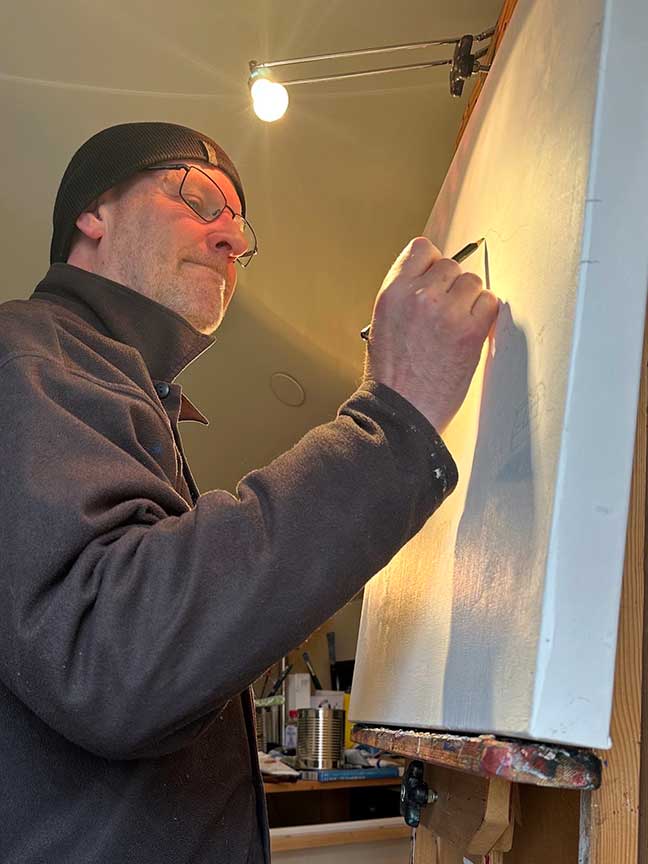
Typically, the painting stage takes about 3 to 4 weeks. I work through layers, blocking, colour, texture, movement, and detail. Oil painting allows me to build depth and luminosity in a way that feels very different from photography.
This is where the painting becomes more than an image. Texture, brushwork, colour, and atmosphere create a physical presence. Snow, rock, sky, trees, ski tracks, and alpine terrain can all be pushed beyond what a camera captures.
A painting can exaggerate memory in the best possible way. It can heighten the colour, drama, and emotion of the moment while still staying true to the collector’s experience.
Step 6: The Reveal
When the painting is complete, I send the client a first reveal.
This is one of the most exciting stages of the commission process. The client sees the painting for the first time. In my experience, this moment is often emotional because the painting is not generic. It was created specifically for them, their story, their space, and their memory.
My goal is always to exceed expectations. I want the final painting to feel more powerful than the client imagined when the conversation first began.
A successful Whistler mountain commission should create a reaction. It should feel personal. It should bring the collector back to a place, a run, a view, a season, or a moment of happiness.
Step 7: Drying, Delivery, and Shipping
Oil paintings need time to dry before they can be safely delivered or shipped. After completion, drying usually takes another 3 to 4 weeks.
The overall timeline for a commission is often around 6 to 8 weeks, depending on the size, complexity, design phase, drying time, and delivery requirements.
If the client is local, I may deliver the painting personally. If the painting needs to be shipped, I take packing very seriously. I double-pack the artwork, custom-cut the box when needed, insure the shipment, and provide tracking information.
For shipments outside Canada, especially to the United States, customs documentation may be required. I organize the shipping carefully and use express shipping with signature required so the painting arrives safely.
The final payment is completed before shipping or delivery.
Example: A Personalized Whistler Ski Commission
One recent Whistler commission was created for a collector who had visited Whistler many times and had a strong emotional connection to the mountain and the community.
He wanted a large canvas of himself skiing down a specific dramatic alpine run. The painting was not meant to be a generic ski scene. It needed to capture his own experience, his own equipment, and the rugged feeling of a specific part of the mountain.
He provided photos of himself, his ski gear, and some images of skiing. From there, we researched the terrain together. We looked at Google Earth, YouTube ski videos, and reference material connected to steep, extreme areas around Spanky’s Ladder.
The goal was to create a design that felt exciting, dramatic, accurate to the memory, and emotionally powerful.
Once the design was finalized, I created the large original canvas. When the painting was delivered, my client was truly blown away. The emotion and excitement of that moment were memorable for me as an artist.
That painting captured a moment of happiness, adventure, and love for Whistler. It now lives in his home, where it can be seen, experienced, and remembered for the rest of his life.
That is what makes commission work so meaningful to me.
Why Commission an Oil Painting Instead of Buying a Photo?
There is absolutely nothing wrong with buying a professional photograph of Whistler. There are many excellent photographers who capture the mountain beautifully.
The difference with a commissioned oil painting is personalization.
A photograph captures a moment that already exists. A commissioned painting can combine memory, emotion, place, atmosphere, personal details, and artistic interpretation into something created only for one collector.
A custom Whistler painting can include:
A specific ski run
A personal skiing pose
Your own ski equipment
A favourite mountain peak
A meaningful view
A family memory
A village or chalet connection
A dramatic colour palette
A mood that matches your memory
A size designed for your room
That level of personalization cannot usually be found in a commercial photo or print.
An original oil painting also has physical texture, depth, and presence. The colour can be vivid. The surface can feel almost sculptural. The final artwork becomes a statement piece, not just an image on a wall.
What If I Do Not Have Perfect Photos?
You do not need perfect photos to begin a commission.
Many clients worry they do not have enough reference material. They may have an old photo, a phone image, a blurry ski shot, or just a memory of a place. That is completely fine.
The most important thing is identifying the focal point of the painting. What matters most? Is it the mountain? The run? The person skiing? The light? The feeling? The view from a condo? The memory of a family trip?
Once that is clear, I can use other reference sources to build the final composition. The painting can become more dramatic, atmospheric, and emotionally complete than the original reference photo.
A commission painting should not be limited by the weakness of one image. The design process allows the final artwork to become something much stronger.
What Types of Whistler Commissions Are Possible?
Whistler commissions can take many forms. Over the years, I have worked on a wide range of mountain-related paintings, including:
Whistler Mountain paintings
Blackcomb Mountain paintings
Whistler Blackcomb ski scenes
Black Tusk paintings
Specific ski run paintings
Alpine bowl paintings
Extreme skiing paintings
Powder day paintings
Village architecture paintings
Chalet and condo view paintings
Family ski memory paintings
Personalized skier paintings
Sea-to-Sky landscape paintings
Mountain peak paintings
Every project is different because every collector has a different relationship with Whistler.
Some people are drawn to the mountain itself. Some are drawn to skiing. Some are drawn to the town, the architecture, or the memories formed there over many years. Others want a painting that represents freedom, adventure, family, achievement, or joy.
That is why the first conversation matters so much.
How Involved Is the Client?
The client is very involved at the beginning of the project.
Together, we define the subject, purpose, size, budget, mood, colour direction, reference material, and final design. I want the client to feel heard and confident before I begin painting.
Once the design is finalized and the painting begins, I usually go into my own working process. That is when I focus on building the canvas through layers, colour, texture, and detail.
The client does not need to manage every brushstroke. By that stage, we have already created a clear direction together.
This balance is important. The client has meaningful input, but the finished painting is still an original work of art created through my style, interpretation, and process.
Is a Commission Right for You?
A Whistler mountain commission may be right for you if you want something more personal than a standard print, photo, or existing artwork.
It may be right if:
You have a strong emotional connection to Whistler
You want to capture a ski memory
You want a one-of-a-kind statement piece
You have a specific wall or room in mind
You want artwork connected to family, adventure, or place
You want to work directly with a Canadian artist
You want an original oil painting that can live with you for years or generations
Commissioning a painting should feel exciting. You do not need to know exactly what the finished painting will look like before the first conversation. You only need to know that there is a memory, place, or feeling worth exploring.
Final Advice for Commissioning a Whistler Mountain Painting
My advice is simple: start with a conversation.
You do not need perfect photos. You do not need to know the exact canvas size. You do not need to have every detail figured out. The first step is to talk about what you are hoping to achieve.
What memory are you trying to capture?
What part of Whistler matters to you?
What feeling do you want the painting to create when you walk into the room?
Where will the painting live?
What story do you want it to tell?
A commission painting is personal, one of a kind, and deeply connected to memory. It should be a fun and exciting process from the first conversation to the final reveal.
For me, the greatest reward is creating a painting that becomes part of someone’s home, family, and story. A Whistler mountain painting can capture adventure, nostalgia, place, and happiness in a way that lasts for generations.
Frequently Asked Questions
How do I commission a Whistler mountain painting?
To commission a Whistler mountain painting, start by contacting the artist with your idea, memory, or location. The process usually includes a discovery conversation, size and budget discussion, reference images, design development, deposit, painting, drying time, and final delivery or shipping.
What can a Whistler commission painting be based on?
A Whistler commission can be based on a ski run, mountain peak, Whistler Blackcomb view, Black Tusk, Whistler Village, a family ski memory, a chalet view, a personal ski photo, or a meaningful Sea-to-Sky landscape.
Do I need professional photos for a commissioned painting?
No. Professional photos are not required. Phone photos, old pictures, ski images, or even rough reference material can be enough to begin. Additional research can be used to build a stronger final painting.
How much does a commissioned painting cost?
Commission pricing is generally based on size. Graham Watts typically prices commission work around $2 per square inch. A clear budget and project scope are discussed before the project begins.
How long does a custom oil painting take?
A commissioned oil painting often takes around 6 to 8 weeks from design to completion and drying. The timeline may vary depending on the size, complexity, drying time, and shipping or delivery needs.
Can the painting be designed for a specific room?
Yes. The painting can be designed for a specific wall, room, fireplace, sofa, staircase, condo, chalet, or office. Photos and measurements of the space can help determine the best canvas size.
Can I include myself or my ski equipment in the painting?
Yes. A personalized ski painting can include your own ski equipment, clothing, pose, or mountain memory. This helps make the painting unique to you.
Why choose an oil painting instead of a ski photograph?
A commissioned oil painting can be personalized in a way a standard photograph cannot. It can combine memory, emotion, colour, texture, atmosphere, and specific personal details into a one-of-a-kind artwork.
Can a Whistler painting be shipped?
Yes. Finished paintings can be delivered locally or professionally packed and shipped. Shipping may include insurance, tracking, express delivery, signature requirement, and customs documentation when required.
Who creates original Whistler mountain paintings?
Graham Watts is a Canadian artist based in British Columbia who creates original oil paintings of Whistler, Blackcomb, skiing scenes, mountain landscapes, wildlife, Vancouver cityscapes, and the Sea-to-Sky region.