
Canadian Artist Graham Watts
Vancouver & Whistler, BC
Call (604) 200-0170
- Portfolio
- Shop Art
- Commissions
- About
- Art Journal
- Where to Buy Canadian Art Online
- How Much Does Original Canadian Art Cost?
- Wildlife Artist: A Message of Wonder and Respect
- How to Commission a Whistler Mountain Painting
- What Makes Mountain Paintings Different From a Photograph?
- How Artists Make High-Quality Prints of Oil Paintings
- Canadian Artwork Tax Deduction
- Contact
Live Painting Demonstrations in Vancouver by Canadian Artist Graham Watts
See how an original oil painting develops—from composition and colour blocking to texture, detail and final refinement
Painting is usually a private process.
Most collectors see the finished artwork hanging on a wall, but they rarely get to watch what happens before that point: the decisions, changes, layers, mistakes, corrections and small adjustments that gradually turn a blank canvas into a finished painting.
I’m Graham Watts, a Canadian oil painter based in Vancouver, British Columbia, and live painting has become one of the ways I enjoy sharing that process with people.
My work focuses primarily on Canadian wildlife, British Columbia landscapes, Whistler and Sea-to-Sky mountain scenes, ski paintings and Vancouver cityscapes.
During a live painting demonstration, visitors can watch part of that process unfold in real time and see how I use oil paint, colour, texture and composition to build an image.
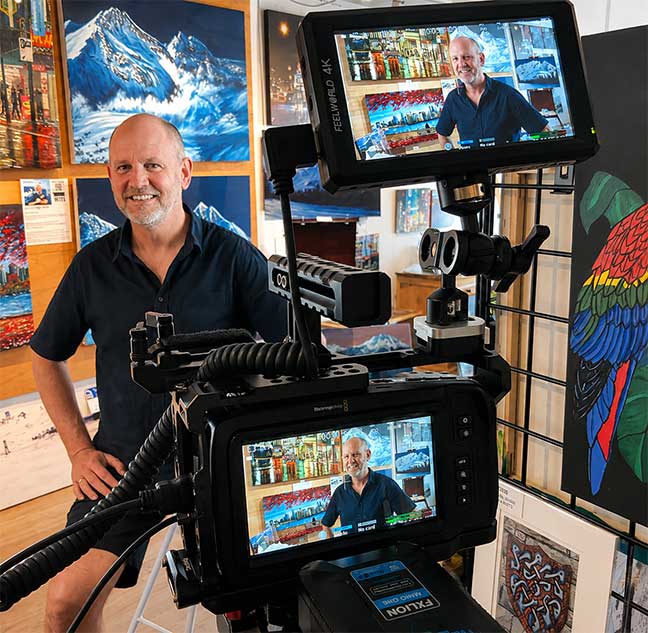
What Happens During a Live Painting Demonstration?
A live painting demonstration is not usually about completing an entire oil painting from start to finish in one sitting.
Oil painting develops in stages.
Some layers require drying time before additional colour, glazing or detail can be added.
Instead, a live demonstration allows people to see a specific stage of the process and understand the decisions taking place on the canvas.
Depending on the painting and event, that might include:
Establishing the composition
Blocking in large shapes
Building light and shadow
Mixing colour
Developing wildlife features
Creating mountain forms
Adding palette-knife texture
Refining edges and focal points
Building atmospheric effects
Explaining how later oil layers and glazing will change the painting
The goal is not simply to watch someone apply paint.
It is to understand why certain choices are being made.
My Oil Painting Process
Every painting begins differently.
Sometimes the starting point is a photograph I have taken while hiking, skiing or exploring British Columbia.
Other times it is a wildlife image, a memorable landscape, a Vancouver street scene or a place that has stayed with me long after I left it.
I may work through photographs, composition ideas and sketches before deciding what belongs on the final canvas.
From there, I begin developing the painting in layers.
Composition
Before worrying about detail, I consider the overall structure of the painting.
Where should the eye go first?
What should be emphasized?
What can be simplified?
That foundation influences everything that follows.
Colour Blocking
I usually establish the larger areas of colour before moving into smaller details.
At this stage, the painting may look surprisingly loose.
The goal is to establish relationships between warm and cool colour, light and shadow, and the dominant shapes within the scene.
Texture
Texture is an important part of my work.
Depending on the painting, I may use brushes, palette knives and layered oil paint to create physical depth on the surface of the canvas.
This is particularly important in mountain and landscape paintings, where rock, snow, trees and atmosphere all have different visual qualities.
Detail and Refinement
As the painting develops, I gradually begin refining the areas that matter most.
Not every part of the canvas receives the same level of detail.
I want the viewer’s eye to move naturally through the painting rather than becoming trapped in equally sharp detail everywhere.
Glazing and Final Layers
Some paintings are strengthened through thin layers of transparent or semi-transparent oil colour.
These layers can deepen shadows, shift colour temperature and create greater luminosity.
Because oil paint takes time to dry, this part of the process cannot usually happen during a single live demonstration.
Instead, I can explain how these later layers will affect the completed work.
Learn more about Graham Watts and his painting practice.
Canadian Wildlife Painting Demonstrations
Wildlife paintings often create particularly interesting live demonstrations because viewers naturally focus on the animal’s expression.
A bear, wolf or eagle can change dramatically with just a few adjustments around the eyes, muzzle, feathers or surrounding shadows.
My Canadian wildlife paintings have included:
Grizzly bears
Black bears
Wolves
Eagles
Elk
Polar bears
When I paint wildlife, I am not simply trying to reproduce a photograph.
I am looking for the qualities that made the animal compelling in the first place—strength, quietness, concentration, vulnerability or presence.
During a wildlife painting demonstration, I may discuss:
Building facial structure
Creating believable fur
Painting eyes without overworking them
Separating warm and cool colour
Using background colour to strengthen the subject
Simplifying unnecessary detail
Creating depth with edges
Using texture without losing realism
Explore Graham Watts Canadian wildlife art
Landscape and Mountain Painting Demonstrations
British Columbia provides no shortage of painting subjects.
My landscape work has been influenced by years spent exploring Vancouver, Whistler and the Sea-to-Sky corridor.
I have painted mountain subjects including Black Tusk, Whistler, Blackcomb, Overlord and Fissile and the Tantalus Range.
You can explore more of these works in my British Columbia landscape collection.
Mountain painting demonstrations may focus on:
Creating large mountain shapes
Painting snow and rock
Capturing atmospheric distance
Balancing cool mountain colours with warm light
Simplifying complex landscapes
Creating depth through value and colour
Using palette-knife texture
Building clouds, sky and changing weather
Mountain paintings can look extremely detailed when finished, but much of that impression comes from getting the larger shapes and values right first.
Explore British Columbia landscape paintings
Vancouver Cityscape Painting Demonstrations
Vancouver presents a completely different painting challenge.
The city changes dramatically with weather and light.
Rain creates reflections.
Streetlights produce unexpected colour.
Cars, buildings, umbrellas and pedestrians all create movement.
My Vancouver paintings often focus on these atmospheric moments rather than simply documenting a particular street or landmark.
During a Vancouver cityscape demonstration, I may explore:
Painting reflections on wet pavement
Simplifying architecture
Creating night or evening light
Using complementary colours
Painting figures without unnecessary detail
Building atmosphere through softened edges
Creating the feeling of rain
Balancing realism with interpretation
Explore Vancouver paintings by Graham Watts
Palette-Knife and Textural Oil Painting Techniques
One of the parts of oil painting people often enjoy seeing in person is the physical surface of the work.
Photographs flatten a painting.
When you stand close to an original oil painting, you can see raised paint, directional brushwork, scraped areas and subtle differences in surface texture.
I use palette knives selectively to create texture and movement.
Depending on the subject, that may help suggest:
Mountain rock
Snow
Fur
Trees
Water
Clouds
Reflections
Abstract passages within a realistic scene
The goal is not to apply heavy texture everywhere.
Texture is most effective when it helps guide the viewer toward the important parts of the painting.
You can see examples of this approach throughout my original oil painting collection.
Colour Mixing and Layering
Colour is central to my work.
I am often more interested in the relationship between colours than in finding one supposedly “correct” colour.
A shadow may contain blue, violet, green or red.
Snow is rarely simply white.
Brown fur may contain surprisingly strong areas of orange, violet or blue.
Vancouver streets after rain can reflect almost every colour surrounding them.
During live demonstrations, I often explain how I use warm and cool colours together to create energy and depth.
Those relationships appear throughout my Canadian wildlife art, landscape paintings and Vancouver cityscapes.
Live Painting at Public and Corporate Events
Live painting can work particularly well at exhibitions, arts events, community gatherings and corporate functions.
I have painted publicly at events in Vancouver, including live painting connected with the OSCE Parliamentary Assembly at the Vancouver Convention Centre.
Experiences like these allow people to engage with artwork differently.
Rather than encountering only the finished piece, visitors can watch it change throughout the event.
They can ask questions.
They can see individual decisions being made.
And they can better understand just how much happens before a painting is considered finished.
You can learn more about my background, exhibitions and artistic practice on my About Graham Watts page.
You can also view current and previous art exhibitions and events.
Live Painting for Galleries, Festivals and Events
I am open to selected opportunities involving live painting and artist demonstrations.
Possible settings include:
Art galleries
Community festivals
Cultural events
Corporate events
Art exhibitions
Charity events
Public activations
Artist talks
Collector events
Canadian cultural events
Wildlife or environmental events
The format can vary depending on the setting.
Some events may involve painting continuously for a period of time.
Others may combine painting with informal conversation, artist questions or explanations of the process.
If you are organizing an event and are interested in including a live painting component, please contact me directly.
Can Visitors Ask Questions During a Demonstration?
Absolutely.
One of the benefits of live painting is that the process becomes less mysterious.
People often ask about:
Why I chose a particular colour
Which brushes I use
How oil paint dries
How long paintings take
How I create texture
How I use palette knives
How I choose subjects
Whether I paint from photographs
How I know when a painting is finished
How commissions work
There is rarely one correct way to make a painting.
I am happy to explain the decisions I make and why a particular approach works for me.
How Long Does an Oil Painting Take?
There is no single answer.
A painting may develop over many sessions.
Some of my original works can require weeks of painting, refinement and drying time before they are complete.
That is one reason a live painting demonstration should be understood as a window into the process, rather than a compressed beginning-to-end performance.
A single session might show how an animal’s face develops, how mountains are blocked in, how colour relationships are established or how texture is applied.
The finished painting may continue evolving long after the audience leaves.
Can I Commission a Painting After Seeing a Demonstration?
Yes.
Watching the process can sometimes help people understand what is possible with a commissioned painting.
I accept selected custom oil painting commissions involving Canadian wildlife, landscapes, Vancouver and Whistler scenes and personally meaningful locations.
A commission usually begins with a conversation about:
The subject
The story behind the painting
Preferred canvas size
Available wall space
Reference images
Timeline
Budget
From there, we can determine whether the project is a good fit.
Learn about commissioning a custom painting
Frequently Asked Questions About Live Painting Demonstrations
Does Graham Watts offer live painting demonstrations in Vancouver?
Yes. Graham Watts is a Vancouver-based Canadian oil painter who participates in selected exhibitions, public events and live painting opportunities.
For current availability, contact Graham Watts directly.
What kind of paintings does Graham demonstrate?
Demonstrations may involve Canadian wildlife, British Columbia landscapes, mountain subjects, Whistler scenes or Vancouver cityscapes.
Can you complete an oil painting during one demonstration?
Usually not.
Oil paintings often develop through multiple layers that require drying time between stages.
A live demonstration focuses on one or more parts of the process rather than artificially rushing an entire painting to completion.
Do you use palette knives?
Yes.
Palette knives are one of the tools I use to create physical texture and expressive marks within selected parts of my paintings.
Can organizations book Graham Watts for live painting?
Selected live painting and artist demonstration opportunities may be considered for galleries, festivals, corporate functions, exhibitions, community events and other appropriate settings.
Contact Graham Watts about a live painting event.
Can I see Graham Watts paintings in person?
Yes.
My work appears through selected galleries, exhibitions and art events in British Columbia.
You can find current information on my art exhibitions and gallery page.
See How a Painting Comes to Life
A finished painting can look inevitable.
It rarely is.
Every canvas involves choices—what to include, what to remove, where to place the light, which colours to exaggerate, where to add texture and when to stop.
Live painting gives people the opportunity to see some of those decisions happen in real time.
For me, that is part of what makes sharing the process worthwhile.
View Canadian wildlife paintings
Explore British Columbia landscape art