
Canadian Artist Graham Watts
Vancouver & Whistler, BC
Call (604) 200-0170
- Portfolio
- Shop Art
- Commissions
- About
- Art Journal
- O Canada: The Story Behind My Canadian Flag Oil Painting
- Buy Canadian Art: Why Supporting Canadian Artists Matters More Than Ever
- Whistler Art Commission: A Collector Story | Graham Watts
- Where to Buy Canadian Art Online
- Canadian Oil Painting Prices: How Much Does Original Canadian Art Cost?
- Wildlife Artist: A Message of Wonder and Respect
- How to Commission a Whistler Mountain Painting
- What Makes Mountain Paintings Different From a Photograph?
- How Artists Make High-Quality Prints of Oil Paintings
- Canadian Artwork Tax Deduction
- What Size Painting for a Vancouver Condo? | Artist’s Size Guide
- Why Art Matters: What Collectors Have Taught Me as a Canadian Artist
- Contact
O Canada: The Story Behind My Canadian Flag Painting
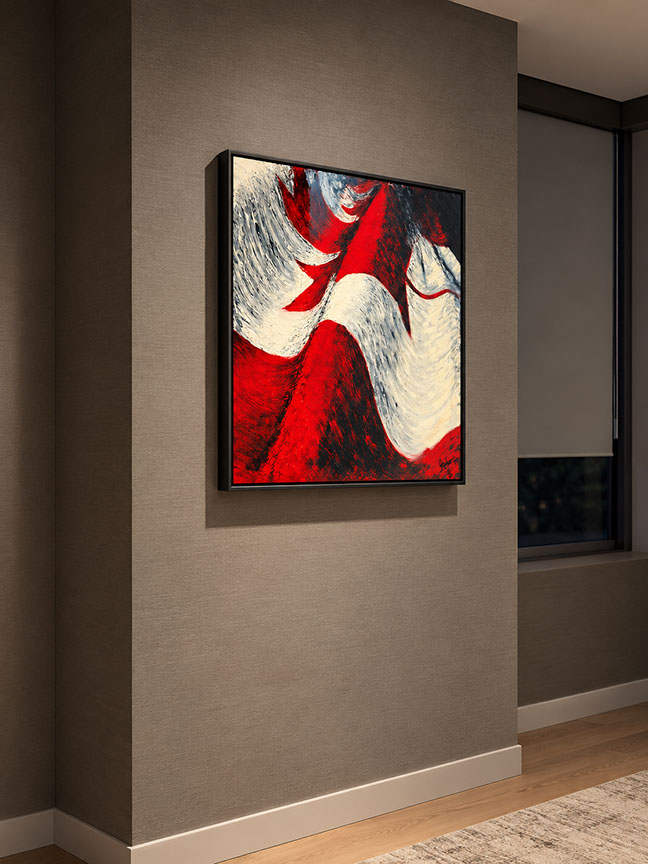
“O Canada” is an original 36 × 30-inch of the Canadian flag painting by Vancouver artist Graham Watts. Inspired by a Canada Day visit to Parliament Hill in Ottawa, I created the painting as a personal expression of national pride, freedom and gratitude for being Canadian.
It was never intended to make a political statement.
It began with a memory.
Several years ago, I travelled to Ottawa to celebrate Canada Day on Parliament Hill. There are few experiences that have made me feel more connected to this country.
Being surrounded by thousands of Canadians, watching flags moving everywhere around me, seeing the Prime Minister taking part in the celebration, touring the Parliament buildings and thinking about the history represented there left a lasting impression.
For me, it was one of those experiences that stays with you long after you return home.
And when I did return home to Vancouver, I wanted to paint it.
Not Parliament Hill itself.
The Canadian flag.
Why I Wanted to Paint the Canadian Flag
I have always felt something when I see the Canadian flag.
I feel it here at home, but perhaps even more strongly when I am travelling internationally and unexpectedly see a Canadian flag somewhere far from Canada.
It immediately represents home.
It also represents something deeper to me: the freedoms and opportunities I have enjoyed as a Canadian citizen and as an artist.
I am grateful that I am able to make art, express myself freely, build a business around my paintings and pursue a creative life in this country.
So when I began “O Canada,” I wasn’t interested in simply reproducing a Canadian flag.
I wanted to paint what the flag made me feel.
Pride. Gratitude. Movement. Celebration. Belonging.
If you’re interested in the wider body of work this painting came from, you can also explore my original paintings and Canadian artwork.
Creating a Canadian Flag Painting That Felt Alive
One of the biggest decisions was how to compose the flag.
I didn’t want the complete rectangular Canadian flag neatly contained within the canvas. That would have made it feel more like an illustration.
Instead, I cropped into it.
The painting measures 36 × 30 inches, giving it an almost-square format. Only a fragment of the flag is visible, bringing the viewer much closer to the fabric.
Most importantly, I wanted the flag to move.
My challenge was creating a natural wave through the composition so that the viewer instinctively understood that this was fabric moving through space rather than a flat, two-dimensional national symbol.
The folds create a three-dimensional perspective.
The flag seems to move across the canvas.
That physical movement became an important part of the painting because, to me, a flag should never feel static.
Why I Painted “O Canada” With a Palette Knife
I used oil paint and worked primarily with a palette knife rather than brushes.
Palette knives allow me to build substantially more texture into a painting. The paint can become chunky and physical, leaving individual marks clearly visible across the canvas.
For “O Canada,” that was exactly what I wanted.
I built the surface using multiple layers of oil paint, particularly through the bold Canadian reds. Each stroke of the knife contributes to the sensation of movement in the fabric.
When you stand close to the original, you can see those individual marks.
Move farther away and they begin to work together as folds, shadows and movement.
That is one of the qualities I love about original oil paintings. You aren’t simply looking at an image. You can see evidence of how the image was physically made.
For collectors interested in original Canadian artwork, you can view more of my work at GrahamWatts.art or browse my Canadian art online at GrahamWattsArt.com.
Experimenting With Resin to Make the Red Come Alive
The final surface of “O Canada” was something of an experiment.
One characteristic of oil paint is that colours can change slightly as they dry. With this painting, I felt that some of the brilliant red I loved while painting had lost a little of its saturation once the oils had dried.
That bothered me.
The red needed life.
So I experimented with a poured art-resin finish.
The result was exactly what I had hoped for.
The resin increased the saturation and boldness of the red while giving the entire painting an almost wet appearance. Light moves across the textured surface, emphasizing the palette-knife marks underneath.
I completed the presentation with a black floating frame, allowing the bright red and white painting to sit dramatically inside a clean dark border.
A Painting I Originally Made for Myself
The interesting thing about “O Canada” is that I didn’t originally paint it because I thought somebody would buy it.
I painted it for myself.
It was my way of preserving the memory of standing on Parliament Hill on Canada Day, seeing Canadian flags waving everywhere around me, experiencing the Parliament buildings and feeling connected to the history of the country.
It was simply something I felt compelled to create.
Several years later, however, the painting took on another life.
When “O Canada” Suddenly Felt Different
I brought the painting back into public view during the summer of 2026.
Vancouver was one of Canada’s host cities for the FIFA World Cup that summer, with BC Place hosting seven matches. The city was filled with flags, visitors and expressions of national identity.
At the same time, Canada was experiencing renewed trade tensions with the United States, while Alberta was engaged in a very public debate about its future within Canada.
None of these events had anything to do with why I originally painted “O Canada.”
But they changed the environment in which people were now seeing it.
And then, on a rainy afternoon on Commercial Drive in Vancouver, something rather wonderful happened.
The Calgary Collector Who Walked In From the Rain
Joe De Almeida and his wife wandered into the gallery where the painting was displayed.
I happened to be working at the gallery that day.
Joe saw “O Canada” and was immediately drawn to it.
We began talking.
He was from Calgary, and the debate occurring in Alberta at the time was very much on his mind. Alberta was approaching its October 19, 2026 referendum, which included a question concerning whether Alberta should remain a province of Canada.
For Joe, the painting suddenly meant something very personal.
He wanted it for his head office.
What I find fascinating is that I hadn’t created the painting for that political moment. I had painted it years earlier because of my own feelings about Canada.
Yet another Canadian could stand in front of it years later, in completely different circumstances, and see his own experience reflected in it.
That is one of the remarkable things original art can do.
Joe De Almeida’s Review of “O Canada”
After purchasing the painting, Joe shared this review:
“It’s amazing what you can discover on a rainy afternoon along Commercial Drive in Vancouver. My wife and I wandered into a gallery collective that immediately reminded us of one we had come across in Quebec City earlier in the year.
We ended up purchasing two pieces, one of which now hangs proudly in our office. Titled Oh Canada, it is a bold and varied interpretation of a subject matter that should be familiar to all Canadians—and, in many ways, to people around the world.
Needless to say, we were both surprised and amused to discover that the individual handling our purchase was none other than the artist himself, Graham Watts.
I love the character and presence of the painting, and I look forward to finding not only inspiration but also joy in Graham’s future works.”
— Joe De Almeida, Calgary
I particularly like Joe’s description of the painting having “character and presence.”
That is exactly what I hoped all those layers of paint, palette-knife marks, folds, saturated reds and the resin surface would create.
What “O Canada” Means to Me Today
The painting now belongs to someone else, but the reason I created it hasn’t changed.
“O Canada” remains a very personal memory of my experience on Parliament Hill.
It is my interpretation of national pride.
It reminds me of standing among Canadian flags on Canada Day, touring Parliament, thinking about our history and appreciating the tremendous privilege I have had to live and work as an artist in this country.
I’m not interested in telling somebody else what they are supposed to feel when they look at it.
Art doesn’t really work that way.
I created “O Canada” because I felt something.
If another Canadian looks at the painting and experiences even a little of that same connection, gratitude, joy or pride, then that is a wonderful bonus.
And apparently, on one rainy Vancouver afternoon, somebody did.
About “O Canada”
Artist: Graham Watts
Title: O Canada
Medium: Original oil painting with art-resin finish
Size: 36 × 30 inches
Technique: Layered palette-knife oil painting
Frame: Black floating frame
Subject: Canadian flag
Inspiration: Canada Day on Parliament Hill, Ottawa
Artist location: Vancouver, British Columbia, Canada
Status: Sold — private collection, Calgary, Alberta
Frequently Asked Questions
Who painted “O Canada”?
“O Canada” was painted by Graham Watts, a Canadian oil painter based in Vancouver, British Columbia. His work includes Canadian landscapes, wildlife, Vancouver scenes and paintings inspired by Whistler and the mountains of Western Canada.
What inspired the Canadian flag painting “O Canada”?
The painting was inspired by Graham Watts’ visit to Parliament Hill in Ottawa for Canada Day. After returning home, he wanted to create a painting that captured the national pride, celebration and connection to Canada he experienced during the trip.
How was “O Canada” painted?
The 36 × 30-inch original was painted in oils primarily using a palette knife. Multiple layers of paint were built up to create texture and the appearance of fabric moving in three-dimensional space.
Why does the painting have a resin finish?
The art-resin finish was an experiment intended to restore some of the saturation and intensity of the red oil paint after it dried. The resin deepened the colours and created a glossy, almost wet-looking surface.
Is “O Canada” still available?
No. The original painting has been sold to a Calgary collector and now hangs in his office. You can see currently available original paintings by Graham Watts here.
Where can I buy original Canadian art by Graham Watts?
Available original paintings can be found through GrahamWatts.art, while additional Canadian artwork and prints can be explored at GrahamWattsArt.com. Graham’s work can also be seen through Arts Off Main in Vancouver.